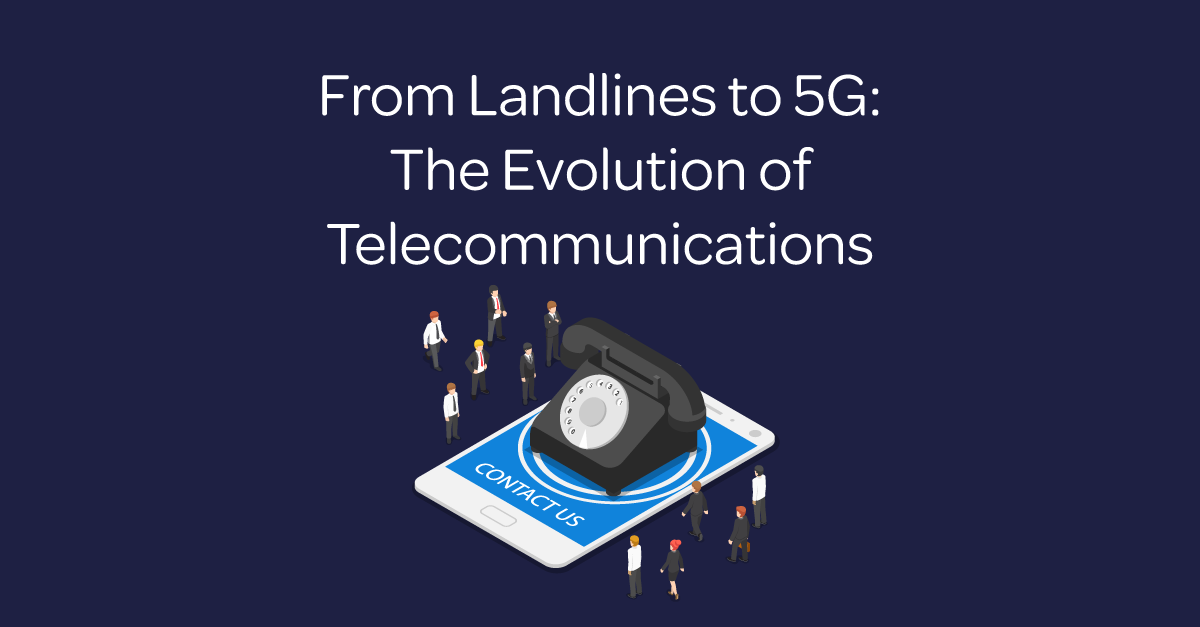
The evolution of telecommunications is the shift from fixed, voice-only landlines to digital networks that carry calls, messages, video and data almost anywhere. Each generation has increased speed, capacity and flexibility, while making communication easier to access.
What is telecommunications?
Telecommunications is the electronic exchange of information over distance. It includes fixed and mobile phone calls, broadband, Wi-Fi, messaging, video meetings and connected devices. The underlying network may use copper cable, fibre-optic cable, radio signals or satellites.
How did telecommunications evolve?
Telecommunications developed through several overlapping stages. Landlines created reliable voice connections. Mobile networks made calls portable. The internet brought data and real-time digital services. Fibre, Wi-Fi and 5G now connect people, workplaces and devices at much greater speeds.
Landlines: reliable voice communication
Traditional landlines send voice signals through a physical network, historically using copper wires. For decades, they were the main way homes and organisations made calls. Their fixed location and voice-first design were useful for reliable communication, but they offered little mobility and limited support for data.
Mobile phones: communication on the move
Commercial mobile networks expanded during the 1980s. Early handsets were large and costly, but later generations became smaller, more affordable and more capable. Today, mobile phones combine calling, messaging, internet access and workplace applications in one portable device.
The internet: one network for voice, data and video
The internet changed telecommunications by allowing many types of information to travel over a shared digital network. Email, instant messaging, websites and video calls reduced the importance of distance. Internet Protocol, or IP, also made it possible for voice services to run over data connections rather than a separate telephone network.
Broadband, fibre and Wi-Fi: faster everyday access
Broadband provided an always-on internet connection with far more capacity than dial-up. Fibre-optic networks increased speed and reliability by transmitting information as light. Wi-Fi then made local access wireless, allowing laptops, phones and other devices to share a fixed connection.
3G, 4G and 5G: generations of mobile data
Third-generation networks made practical mobile internet access possible. Fourth-generation networks improved data speeds and supported services such as high-quality streaming and cloud applications. Fifth-generation, or 5G, networks add greater capacity, lower delay and better support for many connected devices.
What does 5G improve?
5G can deliver faster downloads, lower latency and more consistent performance in busy areas when suitable coverage and devices are available. Lower latency means data can travel between a device and network more quickly. That matters for responsive applications, remote collaboration and some industrial systems.
5G does not replace every fixed connection. Fibre broadband can still be the best primary service for a workplace that needs predictable capacity. Mobile and fixed networks increasingly complement each other, giving organisations more options for resilience and flexible working.
How has this evolution changed business communication?
Modern telecommunications brings voice, video, messaging and business applications together. Teams can work across locations, customers can choose how to make contact, and cloud-based phone services can route calls to different devices. Organisations can also add or remove users without installing a separate physical line for every person.
The benefits depend on good planning. Coverage, bandwidth, security, accessibility and service continuity all matter. A suitable solution should reflect how people work, which applications they use and what should happen if a connection is interrupted.
What comes after 5G?
The next stage will combine wider 5G coverage, continued fibre deployment, smarter network management and a growing number of connected devices. Research into future mobile standards will continue, but the lasting direction is clear: networks will become more software-led, adaptable and integrated.
The evolution of telecommunications is therefore not simply a race for higher speed. It is an ongoing move towards communication that is more flexible, resilient and useful. From copper landlines to fibre and 5G, every major step has expanded what people and organisations can do across distance.